
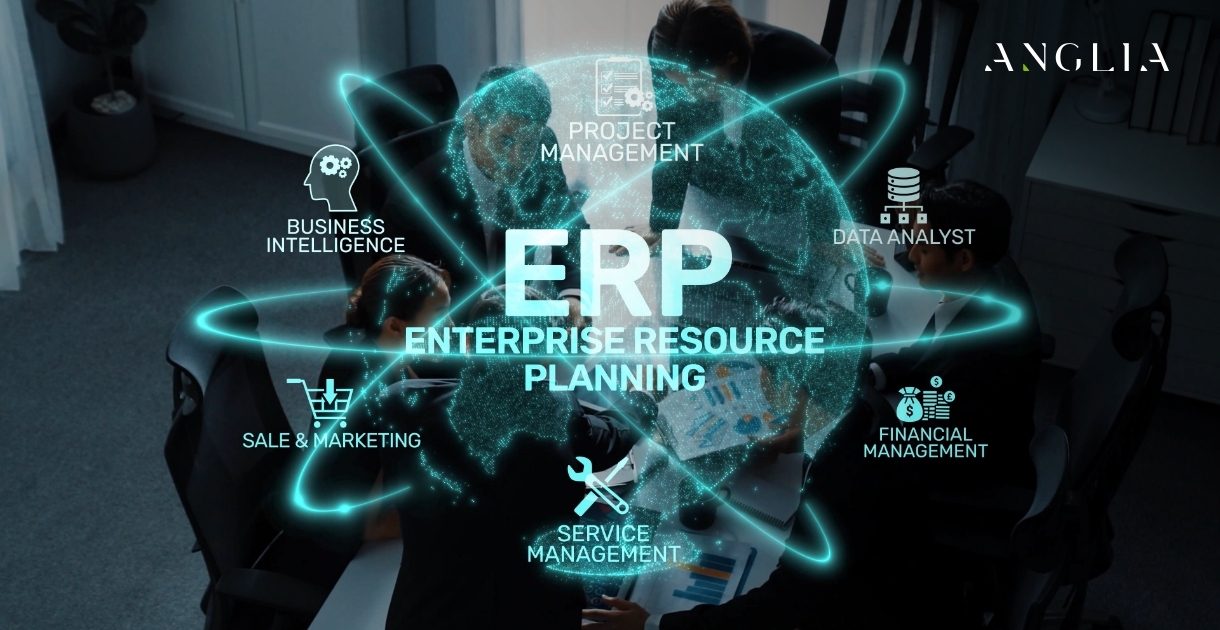
Enterprise Resource Planning systems have evolved from specialized accounting tools into comprehensive platforms managing virtually every business function. At ANGLIA, we help organizations understand how these integrated solutions transform fragmented operations into cohesive, data-driven workflows. The right ERP implementation creates visibility across departments previously operating in isolation.
Modern ERP platforms consolidate functions including finance, inventory, human resources, and customer relationships within unified databases. This integration eliminates redundant data entry and ensures consistency across reporting. Rather than maintaining separate software systems that require manual reconciliation, businesses access real-time information reflecting current operational states.
Decision-makers gain accurate insights without waiting for month-end consolidation processes.
Scalability distinguishes effective ERP solutions from limited point applications. As organizations expand, their systems must accommodate increased transaction volumes, additional locations, and new business lines. Many trading and manufacturing enterprises rely on ERP scalability to support complex supply chains and multi-currency operations. Modular architectures allow incremental functionality additions without disrupting existing workflows.
Implementation success depends heavily on preparation and change management. Organizations must map existing processes, clean historical data, and train personnel before deployment. When integrated with professional website development and customer-facing platforms, ERP systems create seamless experiences connecting internal operations with external stakeholders. If considering ERP adoption, our systems consultants can evaluate your requirements and recommend appropriate solutions.